Reverse PoE GEPON ONU : outdoor fiber power supply in 2026
Contents
Are you deploying an FTTH network in an old building, on a telegraph pole, or in a technical room without an accessible mains socket ? The classic ONU requires a 220 V AC power supply, which heavily complicates the installation (running an electrical cable, adding an enclosure, mandatory inspection).
The reverse PoE ONU (also called PoE PD ONU) solves this problem : it powers itself directly via the Ethernet cable that carries the data. A single Cat 6 line from an indoor PoE switch, and the outdoor ONU works without a mains socket. This guide explains its principle, its applications and the selection criteria.
The power supply problem in outdoor FTTH
In a classic PON deployment, each ONU/ONT must be powered individually. Several contexts make this power supply difficult :
- Hallways of old buildings : mains sockets are rare, often on a shared circuit breaker
- Telegraph poles : no electrical power available outdoors
- Exterior walls of rural houses where the electricity is inside
- Shared technical rooms : undersized meters, unstable power supply
- Stairwells : require a certified electrical enclosure, which is costly
In the renovation of social housing estates and old buildings, the cost of powering the ONUs in the hallway represents 30-50% of the total cost of an FTTH deployment — often more than the fiber itself.
What is a reverse PoE ONU ?
PoE (Power over Ethernet) makes it possible to transmit data and power simultaneously over a single Ethernet cable. A PoE-compatible device connects to a PoE switch (PSE, Power Sourcing Equipment) that supplies it with power and connectivity.
The reverse PoE ONU (or PoE PD — Powered Device) has a particularity : instead of being powered by an upstream switch (operator side), it is powered by the switch downstream (at the user's premises). The principle :
- The PoE PD ONU is installed outside (hallway, pole, wall)
- A Cat 6 Ethernet cable runs down to the user's premises
- A PoE switch (PSE) indoors powers the ONU via this cable
- The user pays for the electricity consumed by the ONU instead of the operator
This architecture solves two problems at once :
- Outdoor power supply : no more need for a mains socket on the ONU side
- Operator cost : the user pays for the electricity (a few € per year for 5-10 W)
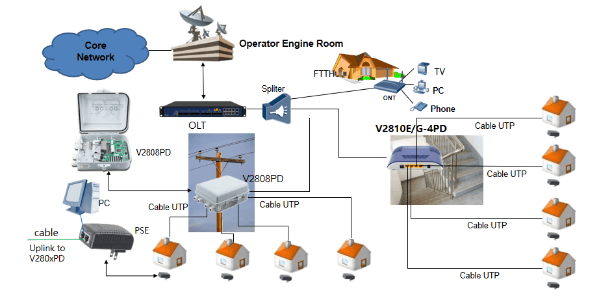
Architecture of a reverse PoE deployment
| Step | Equipment | Location |
|---|---|---|
| 1 | GEPON/GPON OLT | Operator central office |
| 2 | Backbone fiber | Chamber & ducts |
| 3 | PLC splitter 1:8 to 1:64 | Street cabinet (SRO) |
| 4 | Distribution fiber | PBO network (pole/building) |
| 5 | Reverse PoE ONU | Outdoor, hallway, pole |
| 6 | Cat 6 PoE Ethernet cable | From reverse PoE to dwelling |
| 7 | PoE switch (PSE) | Indoors, near the meter |
| 8 | WiFi router + devices | User's dwelling |
Note that the ONU and the PoE switch are connected by a single Cat 6 Ethernet cable that carries both data and power. No double cabling, no mains socket to run on the ONU side.
Typical use cases
1. Hotel deployment (POL)
A 4-star hotel wants to switch its connectivity to POL fiber. The OLT is in the central technical room, each floor has a weatherproof reverse PoE ONU powered from the floor's technical room. Installation 2× faster than with a classic ONU.
2. Rural PBO network on poles
In a rural public initiative network, the ONUs are installed on telegraph poles to serve 4-8 houses. Classic power would require an ENEDIS electrical connection on each pole (cost ~€1500/pole). With reverse PoE, a simple weatherproof Cat 6 cable runs down to the user's house.
3. Hallways of old buildings
The FTTH retrofit of a building from the 1920s requires installing one ONU per floor without touching the communal electrics. Solution : a reverse PoE ONU in the hallway + weatherproof Cat 6 cable to each dwelling + PoE switch at each subscriber's.
4. Exterior facades of detached houses
In individual housing, the PoE ONU can be installed on the exterior facade (under the eaves), powered by an indoor Ethernet cable. Advantage : the fiber enters directly at the facade without drilling through the wall to bring in the electricity. Ideal for historic monuments or old walls.
Technical specifications
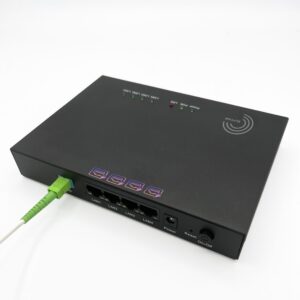
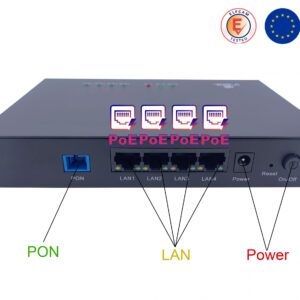
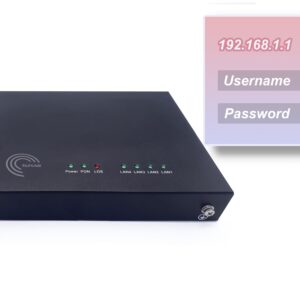
A modern reverse PoE ONU (such as the V2810E-4PD, V2810G-4PD, V2808PD-ZE, V2808PD-ZG, or V-SOL 1GE+3FE PoE XPON ONU) offers :
- OLT compatibility : Broadcom, PMC, Cortina, ZTE, Huawei chipsets
- 802.3af/at PoE power : 12-24 V DC, 5-15 W typical
- IP65/IP67 weatherproofing : wall or outdoor pole installation
- Temperature -40 to +70 °C : withstands summer heat as well as winter frost
- RESET button (3 seconds) for return to factory settings
- Plug-and-play : automatic detection and configuration via TR-069 / OMCI
- Automatic firmware update from the OLT
- Low consumption : 5-10 W typical = €1-2/year of electricity for the user
Elfcam equipment for PoE ONU deployment
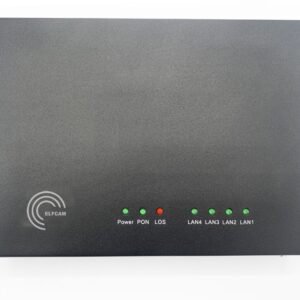
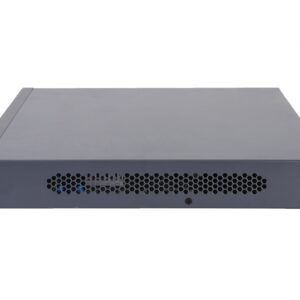
- V-SOL 1GE+3FE PoE XPON ONU — PoE ONU with 1 Gigabit port + 3 Fast Ethernet
- Gigabit PoE switches 4/8/16 ports — PSE to power reverse ONU + IP cameras
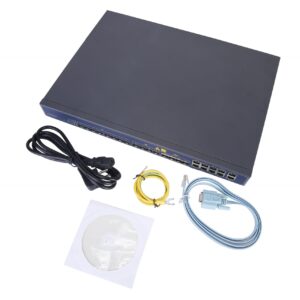
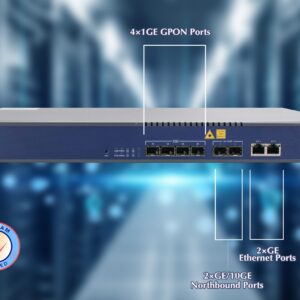
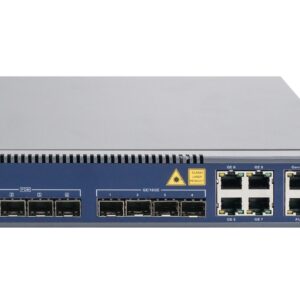
- 16-port GPON OLT — operator-grade for 2048 subscribers
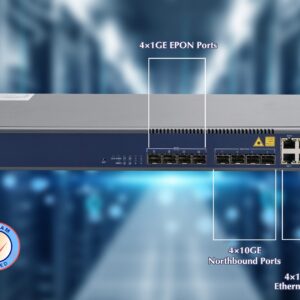
- 4-port EPON OLT — small building or hotel POL
- PLC splitters 1:8, 1:16, 1:32 — PON distribution
- Reinforced outdoor optical cables — ADSS, armored sheath

How to choose your reverse PoE ONU
- Target PON standard : GEPON (1.25 Gbps symmetrical) or GPON (2.5 Gbps / 1.25 Gbps)
- Number of Ethernet ports : 4 ports typical, some models offer 1 GE + 3 FE (mix of speeds)
- PoE type : 802.3af (15 W max) or 802.3at (30 W max ; more headroom for multi-port ONUs)
- IP rating : IP65 is enough for sheltered walls, IP67 recommended for exposed poles
- Temperature range : -40 / +70 °C for continental zones, -25 / +55 °C for temperate ones
- Compatibility with your OLT : check the chipset (Broadcom vs Cortina) before mass deployment
- Wind resistance (for pole installation) : aerodynamic housing
- Certifications : CE, FCC, RoHS, REACH ; IK08+ for mechanical resistance
Deployment tip : combining reverse PoE and camera surveillance
In a hotel or residential POL deployment, the same PoE switch can simultaneously power : (1) the reverse PoE ONU on the floor, (2) outdoor IP cameras, (3) outdoor IP67 WiFi 6 APs. Maximum cabling rationalization : 1 Ethernet cable per point, 1 PoE switch at the core.
FAQ — reverse PoE ONU
1Classic PoE ONU vs reverse PoE ?
- Classic PoE ONU : powered by an upstream switch (operator side), like a normal switch or WiFi AP
- Reverse PoE ONU (PD) : powered by a downstream switch (at the subscriber's) — reversed energy flow
2Who pays for the electricity of the reverse PoE ONU ?
3How much PoE cable drop can be tolerated ?
4Can I use PoE++ (60 W) with an ONU ?
5How to secure the outdoor installation ?
- IK08-IK10 anti-vandalism housing
- Wall / pole mount with anti-theft
- Ethernet cable with anti-UV and durable sheath (outdoor)
- Additional flexible conduit for wall pass-through
- Surge protection at the head of the Cat 6 cable
- Remote monitoring (disconnection alarm via OLT/EMS)
6GEPON vs GPON, which one for my deployment ?
- GEPON (= EPON) : 1.25 Gbps symmetrical, simple to configure, ideal for enterprise POL
- GPON : 2.5 Gbps downstream / 1.25 Gbps upstream, dominant in France/Europe for residential FTTH
7Remote update and maintenance ?
8Elfcam delivery and operator support ?
In summary
The reverse PoE ONU solves the power supply problem in outdoor FTTx or in building hallways. Powered via Ethernet cable from a PoE switch at the user's premises, it drastically simplifies the installation and reduces operator costs.
For an efficient deployment, combine the PoE XPON ONU, Gigabit PoE switches, 16-port GPON OLT, PLC splitters and reinforced outdoor cables. A modular architecture that rationalizes costs (Capex + Opex) and speeds up subscriber connection.